Accounts
 Currency
 Items
Items


Best Champions in Clash Royale in 2026
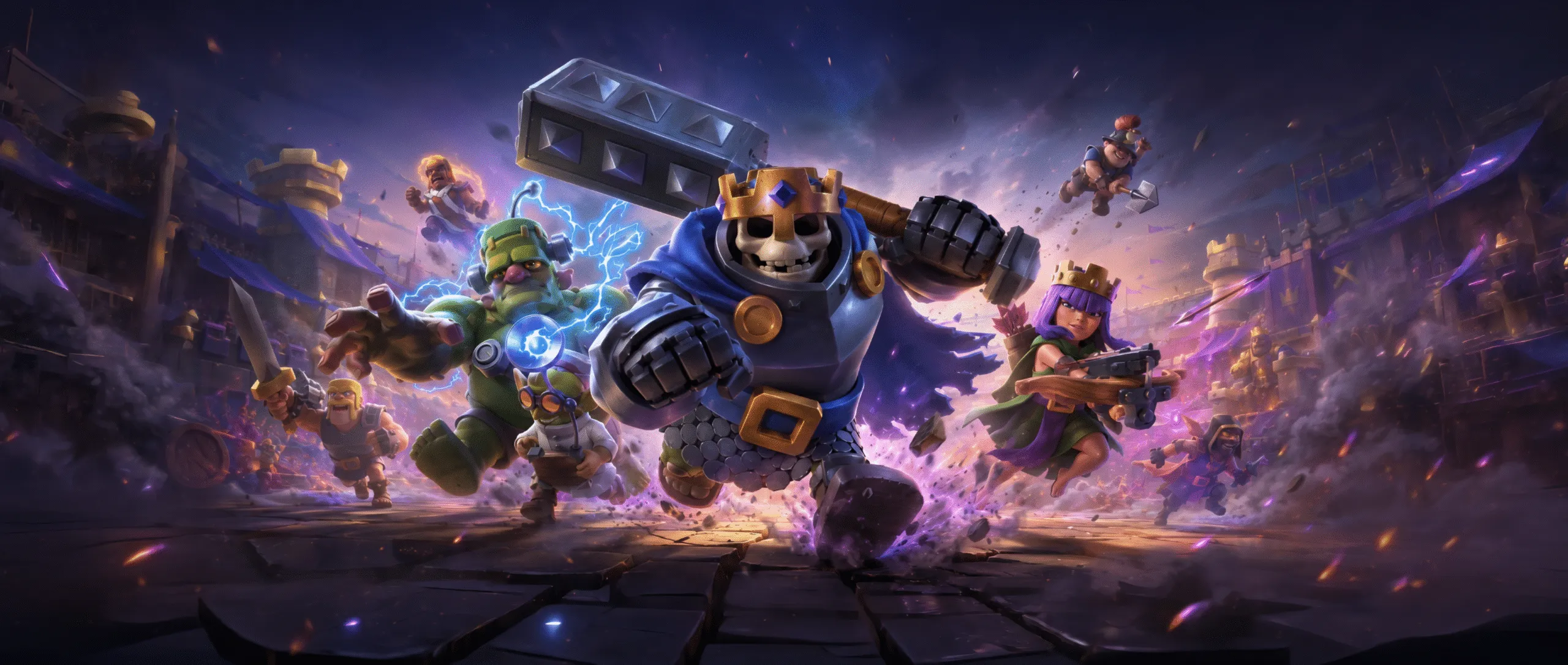
Champions in Clash Royale are basically the rarest, most powerful cards in the entire game. Each one has a unique ability you activate manually using Elixir, and that ability has the kind of impact that can flip a losing match in a single play. There are eight of them total, and you can only have one Champion in your deck at any time. So picking the right one actually matters more than most newer players realise.
Quick note before we get into it. If you’ve been hearing about “Hero” cards recently and you’re a little confused, those are not the same as Champions. Heroes are a separate card class Supercell added in early 2026, things like Hero Goblins, Hero Magic Archer, Hero Mega Minion. They’re upgraded versions of existing cards, not Champions. We are going to discuss strictly about Champions.
If you just want the short answer: Golden Knight is currently the best Champion in the meta. But honestly, that answer is incomplete. Champion rankings shift constantly with every balance update, and the actual best Champion for you is the one that fits your deck and your playstyle. A Golden Knight in a swarm-counter deck is genuinely dominant. A Golden Knight forced into a heavy beatdown shell where his ability gets wasted on a single tank is just an okay 4-Elixir unit. Keep that in mind as we go through the list.
We’re going to rank all 8 Champions from worst to best for the current meta, break down their stats and what each one actually does on the board, and then talk about how Champion level affects performance and which Champion fits your specific playstyle. By the end, you should know exactly which Champion is worth your time and Elixir to commit to.
P.S. Don’t get too hung up on the winrates/usage percentages. Those stats were extracted from the top 1000 player games. In the top 1000, players work things out very differently; certain high-level decks and niche strategies are very common there, and this ramps up the usage rate or win rate of Champions that otherwise would not be as viable in general.
Clash Royale Champions Ranked
A few things to set the stage before we get into the rankings.
First, Champion rankings shift constantly. Every balance update can completely reshuffle which Champions are strong and which ones fall behind. The numbers below are a snapshot of where things stand right now, not a permanent ranking, and stats like win rate and usage rate can change every couple of weeks.
Second, “best overall” doesn’t always mean “best for your deck.” A Champion ranked low in this list might be the perfect pick for your specific archetype, and a Champion ranked high might be terrible if your deck doesn’t support them. We’ll get into playstyle-specific recommendations later in the guide.
Here’s where each Champion stands right now.
8. Little Prince
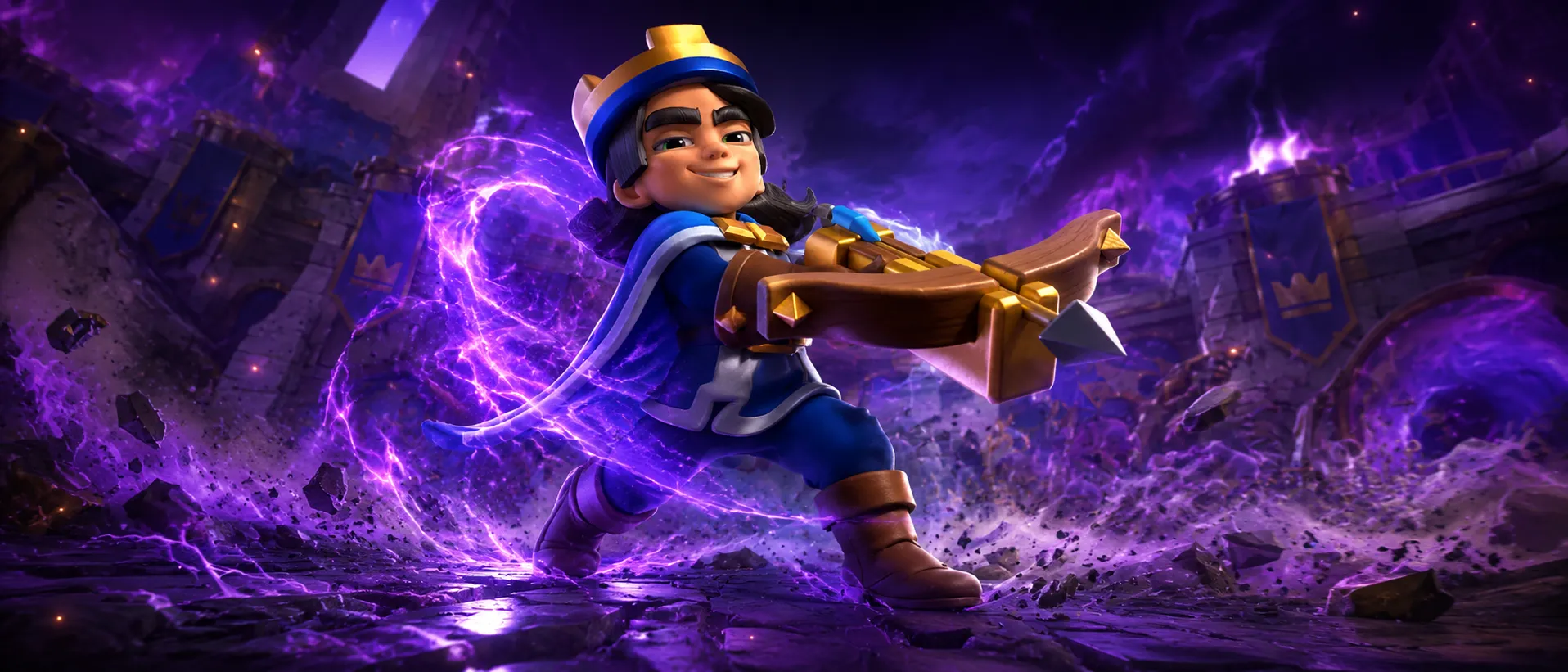
Elixir Cost: 3
Ability Cost: 3
Ability: Summons the Guardienne, a tanky melee unit that distracts enemies and deals decent damage
Usage Rate: Low (~7.7% in top 1000)
Win Rate: ~46-48% in current meta
The Little Prince has been stuck near the bottom of every tier list for a while now, and it’s not really hard to see why. He’s the cheapest Champion in the game on paper, but the value just isn’t there.
- His base damage before the attack speed buff kicks in is genuinely underwhelming. You’re committing a Champion slot for something that hits like a 2-Elixir unit until his attack ramp activates, and by the time it does, he’s often already dead.
- The ability costs 3 Elixir to summon the Guardienne, which mostly just stalls enemies rather than threatening real damage. For 3 Elixir, you could play a better defensive card outright and get more direct value.
- Against popular win conditions like Royal Giant or Golem, he struggles to do anything meaningful. He doesn’t have the burst damage to threaten tanks, and he doesn’t have the survivability to outlast extended pushes.
- His range is awkward. He’s not quite a ranged unit, not quite a melee unit, and that in-between positioning means he often gets killed by both swarm units and direct counters before doing real work.
If you happen to unlock him first as a newer player, sure, level him up enough to use him on ladder until you get a better Champion. But he’s not a long-term investment, and you shouldn’t be sinking serious resources into maxing him out. Save your Wild Cards for a Champion that’s actually going to win you matches.
7. Monk

Elixir Cost: 5
Ability Cost: 2
Ability: Enters a defensive stance that reflects incoming damage and shields nearby units
Usage Rate: Medium (~15.4% in top 1000)
Win Rate: ~48-49% in current meta
The Monk is the kind of Champion that looks great in theory and ends up frustrating in practice. His reflective shield ability is genuinely game-changing when it lands at the right moment, and his base stats are solid enough to threaten in midrange trades. The problem is that 5 Elixir is just too much to commit to a defensive Champion in the current meta.
- Most of the strong decks right now run faster, cheaper threats that don’t give you time to set up the Monk properly. By the time you’ve cycled to him and deployed him, your opponent has already chipped you down or built up a push you can’t fully react to.
- His ability is heavily dependent on timing. You need to predict your opponent’s big push and activate his shield right before the damage lands. Mistime it by even a second and you’re committing 7 Elixir total for almost nothing.
- He works best in slower beatdown matchups where 5 Elixir feels natural, but those matchups are getting rarer. The faster the meta gets, the worse the Monk performs.
- One thing he does genuinely well is match up against spell-heavy decks. The reflective shield can turn a Rocket or Fireball back on the opponent, which feels great when it lands. That’s the kind of moment that keeps Monk players loyal even when his win rate dips.
He’s a solid pickup if your deck is built around heavy midrange beatdown plays. Outside of that, he’s just kind of slow and predictable for what he costs, and the meta has moved on from rewarding his playstyle.
6. Goblinstein
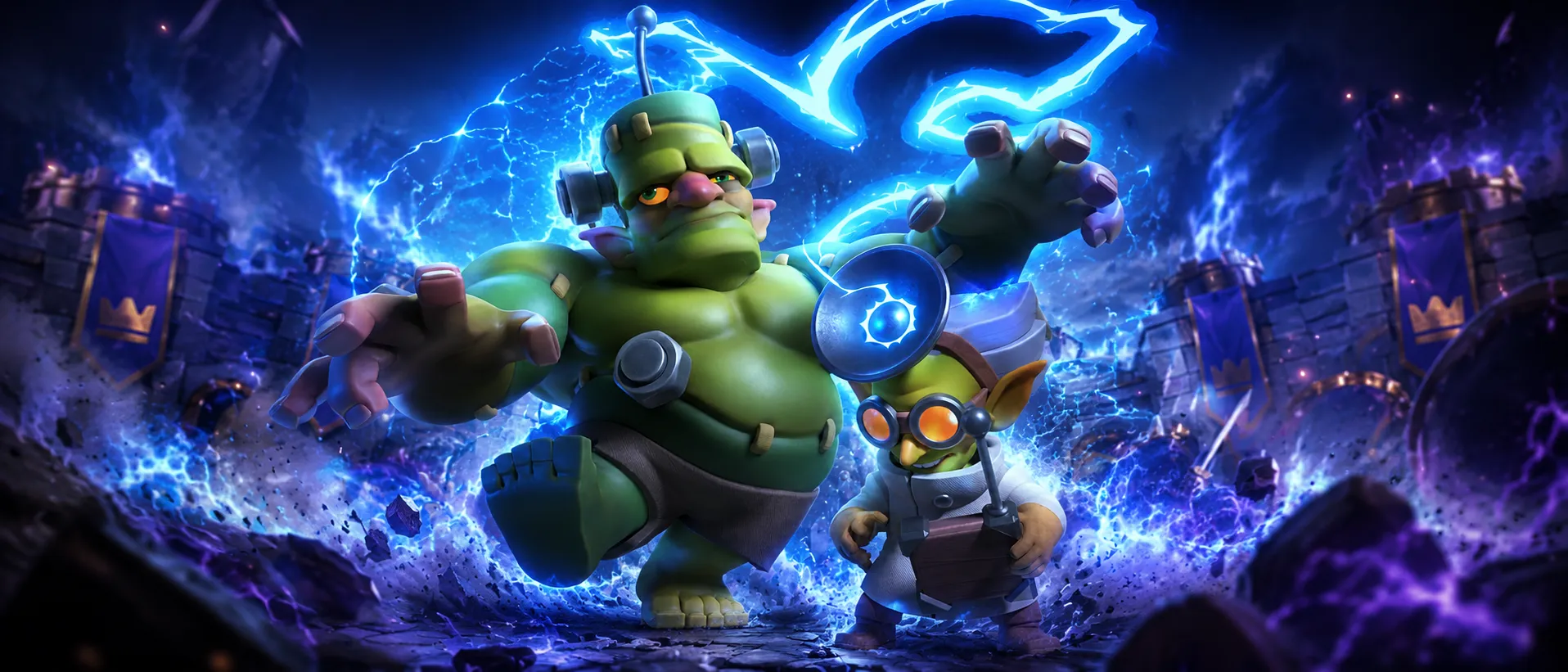
Elixir Cost: 5 (split between the Doctor and the Monster)
Ability Cost: 1
Ability: The Doctor revives the Monster after a delay, allowing repeated deployment
Usage Rate: Low (~7.7% in top 1000)
Win Rate: ~47% in current meta
Goblinstein is one of the more unique Champions in the game. You get two units for the price of one. The Doctor provides ranged support while the Monster tanks for him. The 1 Elixir revive ability also adds long-term value if you can keep the Doctor alive long enough to use it multiple times.
- The issue is that he’s just genuinely awkward to play well. The Doctor is squishy, the Monster moves slowly, and they need each other to function at full strength.
- If your opponent splits them up with a well-placed unit or spell, the whole combo falls apart and you’ve wasted 5 Elixir for very little payoff. Positioning matters more with Goblinstein than with almost any other Champion in the game.
- The revive ability is genuinely strong when it goes off, but it requires the Monster to die in a usable position. If your Monster dies way out of range from the Doctor, the revive is basically useless and you’ve spent a Champion slot for a worse version of a regular Goblin combo.
- He has a high ceiling when everything goes right. Players who master the positioning and pacing of Goblinstein can use him to create constant board pressure that opponents struggle to clear.
- The skill floor is high too. Casual players often get crushed by their own Champion choice with Goblinstein. He’s not the kind of Champion you can just slot in and expect to dominate with.
Skilled players can make him work, but he requires investment in learning how to play him well. If you’re not willing to put in the practice, there are easier Champions that give you more value with less effort.
5. Archer Queen
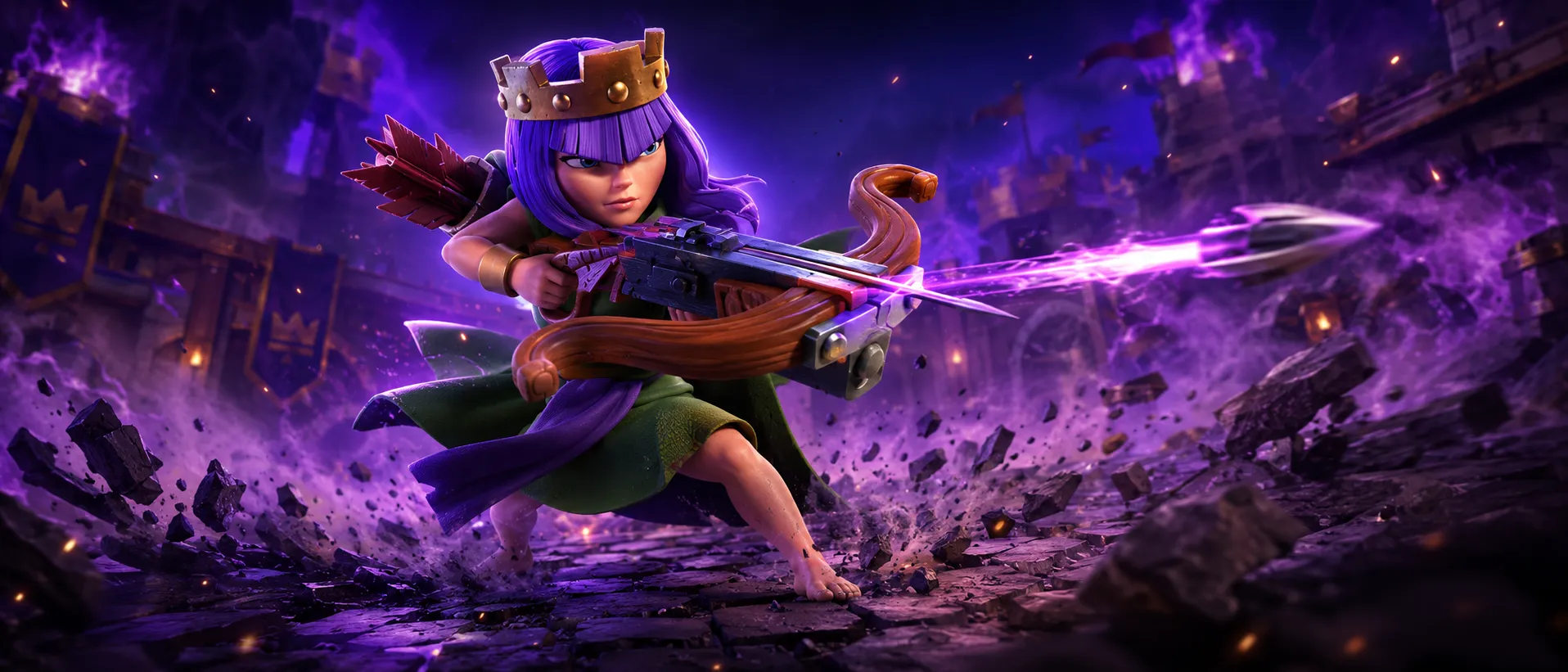
Elixir Cost: 5
Ability Cost: 1
Ability: Becomes invisible briefly and triples her attack speed for the duration
Usage Rate: High (~30.8% in top 1000)
Win Rate: ~49% in current meta
The Archer Queen used to sit comfortably in the top three Champions in almost every meta, and she’s still a solid pick. The shift in the current meta is what’s holding her back, not her own kit, which remains one of the best in the game.
- Her base stats are strong. Good range, good damage, good HP for her cost. She’s a complete unit even before you factor in the ability.
- The ability is one of the best value-per-Elixir abilities in the entire game. 1 Elixir to become invisible briefly and triple her attack speed is genuinely absurd when you really think about it. She can melt a tower in seconds with the right setup.
- The invisibility part is what makes her ability so strong. Even if your opponent is ready to spell her down, the brief invisibility window can dodge the damage and let her keep firing. That kind of unpredictability is rare in Clash Royale.
- What’s holding her back right now is the shift toward faster, more aggressive decks. She struggles against cheap spell pressure and fast-cycling threats that don’t give her time to set up her ability properly. By the time she’s online, opponents have already done damage elsewhere on the board.
- She’s also vulnerable to high-DPS melee units like Mini PEKKA and Mega Knight, which can close the gap before her ability finishes its window. The current meta has more of those than it used to.
The good news is that even in a meta that doesn’t favor her, she’s still one of the most forgiving Champions to play. The ability is cheap enough that you can use it multiple times per match, and her base value as a unit is high enough that even without the ability she’s contributing. A safe investment for any deck that wants ranged Champion utility, even if she’s not the dominant force she once was.
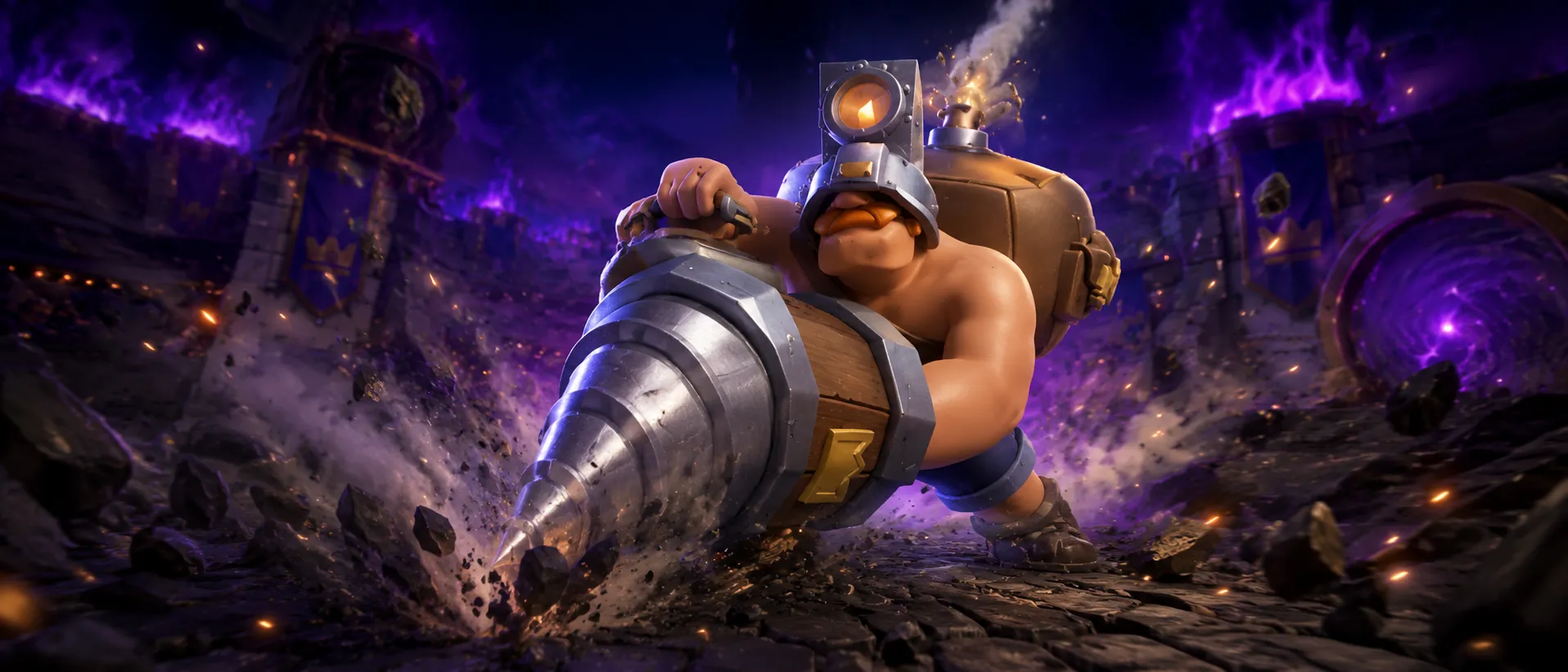
4. Mighty Miner
Elixir Cost: 4
Ability Cost: 1 (per use, repeatable)
Ability: Burrows underground and re-emerges at a new location, dealing AoE damage on exit
Usage Rate: High (~30.8% in top-level play)
Win Rate: ~48% in current meta
The Mighty Miner is probably the most consistent Champion in the game right now. He’s not the flashiest, he’s not the highest-ceiling, but he just quietly produces value match after match in a way very few other Champions match.
- His base stats are genuinely strong even without using the ability. You can deploy him as a regular tanky midrange unit and he’ll still pull his weight, which is something most other Champions can’t claim.
- The burrow ability only costs 1 Elixir, which means you can use it multiple times per match without crippling your Elixir economy. Most Champions have abilities that feel like a commitment. The Mighty Miner’s feels like a free tool you can pull out whenever you want.
- The flexibility is what makes him special. You can use the ability offensively to pressure a tower, defensively to clear support troops, or as a finisher to chip damage on a low-HP tower. Few abilities in the game have that range of viable uses.
- His emerging AoE damage is just strong enough to kill most support units in one hit. That’s huge for clearing pushes without committing extra cards.
- His one weakness is that he doesn’t have one defining “wow” moment. He’s not going to swing a match in one play the way the top three Champions can. But the consistent value he provides over an entire match is incredibly hard to match.
If you want a Champion that just quietly wins you games over time without requiring perfect play, this is the one. He’s also forgiving to learn, which makes him a great pick for players still developing their decision-making in higher arenas.
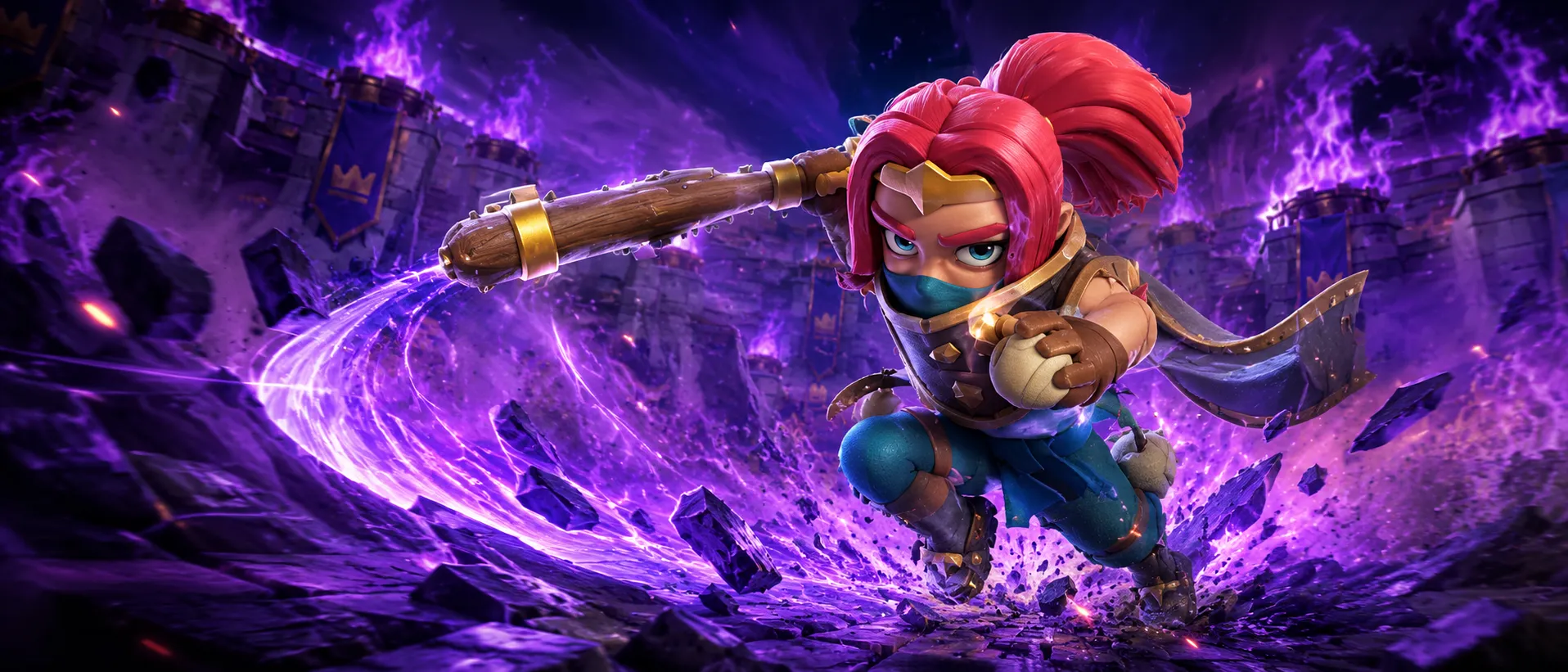
3. Boss Bandit
Elixir Cost: 4
Ability Cost: 2
Ability: Dashes to a targeted location, stunning and damaging enemies in her path
Usage Rate: Low (~7.7% in top 1000)
Win Rate: ~49% in current meta
Boss Bandit has quietly become one of the strongest Champions in the current meta. Her dash-stun-damage combo is the kind of high-tempo punish that fits perfectly with how Clash Royale is being played in 2026.
- The dash itself is genuinely fast and hard to react to. By the time most opponents see her ability animation, she’s already mid-dash and they can’t reposition their counters in time.
- The stun is what makes her a real playmaker. A well-timed dash can take out a high-value support unit, stun a Champion mid-ability, or interrupt a key card cycle. That kind of disruption potential is rare among 4-Elixir Champions.
- Her base stats are solid for the cost. Even when her ability gets countered, she’s still a 4-Elixir unit that can trade reasonably. You’re rarely playing her at a complete loss.
- The 2 Elixir ability cost fits modern cycle decks beautifully. You don’t have to commit a huge Elixir investment to get the playmaking moment, which means you can keep your cycle rhythm intact while still threatening the dash play.
- She’s particularly devastating against squishy ranged units. Magic Archer, Wizard, Princess, all the cards that opponents rely on for damage from behind a tank, she just deletes them in a single dash.
She’s not unbeatable. Opponents who know her patterns can save counters for her, and a well-placed Mini PEKKA or Mega Knight can shut her down completely. But the windows where she pops off are big enough that even when she gets countered occasionally, she still produces more value than most of the field. If you’re playing aggressively and you want a Champion that rewards good timing and decision-making, she’s one of the best picks in the entire game right now.
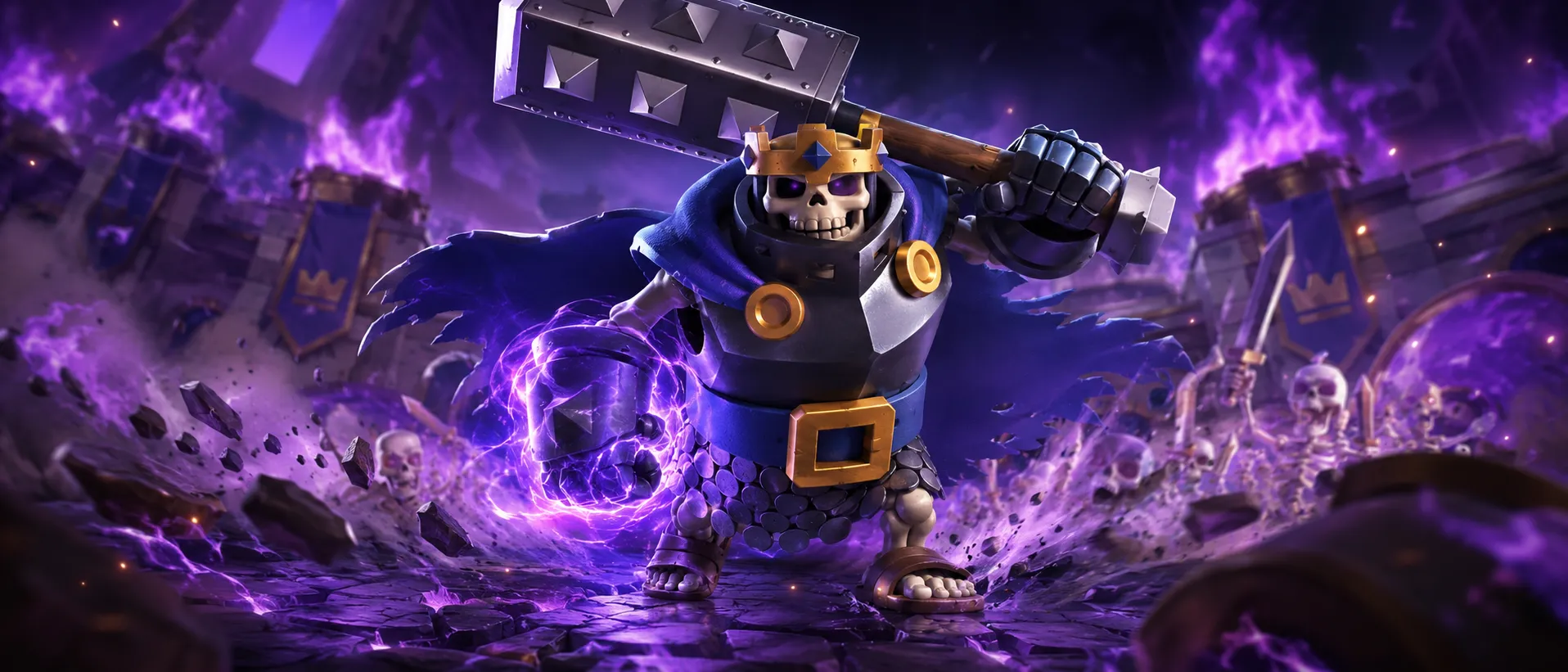
2. Skeleton King
Elixir Cost: 4
Ability Cost: 3
Ability: Summons a horde of skeletons that scales based on enemy units defeated near him
Usage Rate: Very High (~15.4% in top 1000)
Win Rate: ~48% in current meta
The Skeleton King has been at the top of Champion tier lists for so long that he’s almost the default pick at this point. The only reason he’s not at #1 anymore is that the Champion ahead of him has overtaken him in raw versatility.
- His base stats are tanky enough to survive most early trades. At 4 Elixir, you’re getting a unit that can soak damage like a 5-Elixir card, which is incredible value before you even consider the ability.
- The ability scales with how many enemy units you’ve defeated nearby, which means the longer a match goes, the scarier his ability gets. By the second half of a match, his skeleton horde can wipe out an entire push by itself.
- He has no real hard counter. Most Champions struggle in specific matchups, but the Skeleton King performs consistently across beatdown, midrange, control, and even some cycle archetypes. That kind of universal applicability is what kept him at the top for so long.
- His ability cost is 3 Elixir, which is on the higher end, but the payoff is enormous when the soul count is built up. A fully charged ability is one of the most match-winning plays in the game.
- He’s also one of the more forgiving Champions to learn. You don’t need to time anything perfectly. Deploy him, let him soak up some enemy units, and his ability gets stronger naturally. New and intermediate players especially get a ton of value out of him.
The only weakness in the current meta is that swarm-counter decks have become more common, and his skeleton horde can get wiped out by AoE spells like Fireball or Poison. But even with that vulnerability, he’s still one of the most reliable high-impact Champions you can build a deck around.
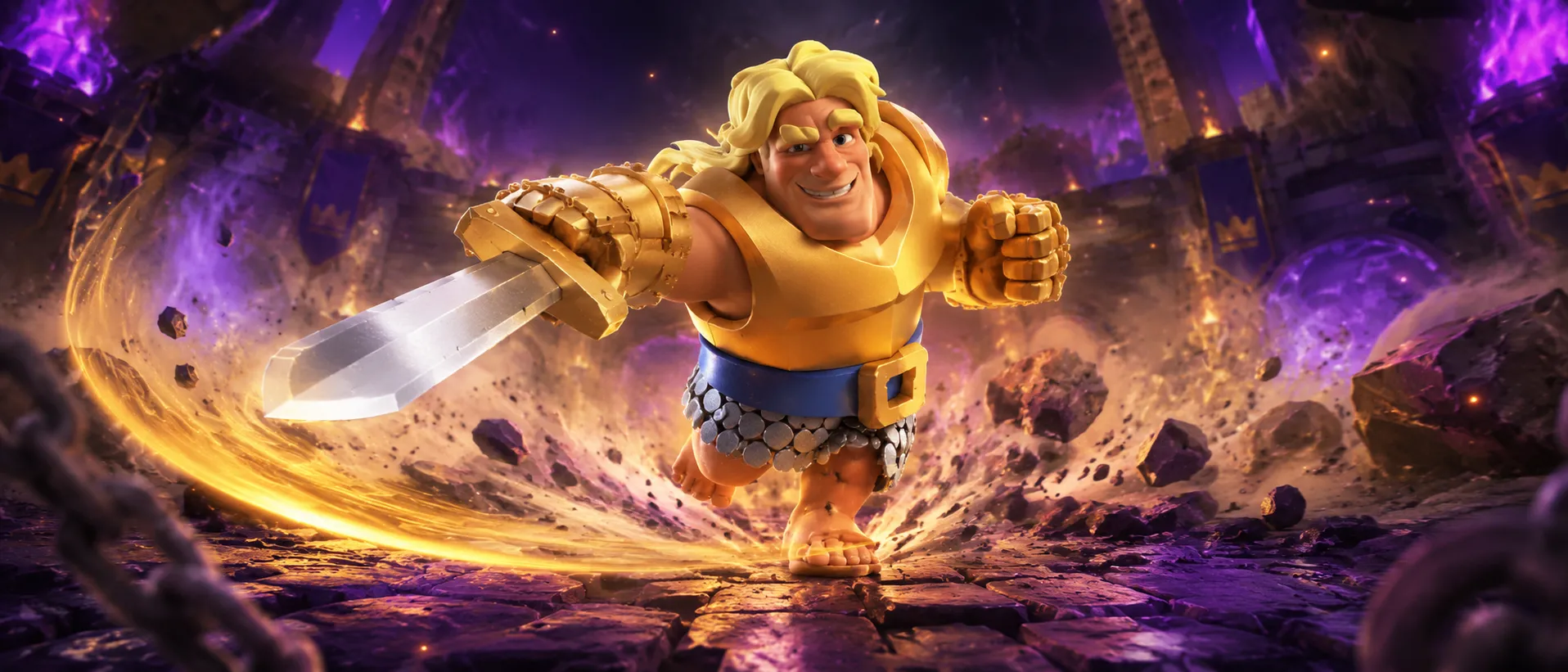
1. Golden Knight
Elixir Cost: 4
Ability Cost: 2
Ability: Activates Dash Streak, chaining short dashes between nearby enemies dealing damage
Usage Rate: Very High (~30.8% in top 1000)
Win Rate: ~48% in current meta
The Golden Knight has taken the #1 spot in the current meta, and honestly, it’s hard to argue with. His Dash Streak ability is one of the most satisfying mechanics in the entire game, and the way it fits into the current meta is the real reason he ranks here.
- The ability chains short dashes through multiple enemies, absolutely deleting swarm pushes that other Champions would struggle to handle. When the dash chains five or six times in a row, the match-winning moments are genuinely spectacular.
- His base stats are strong enough that he’s a threat in straight melee trades, even when his ability isn’t active. He’s not just a one-trick Champion that relies on his ability for value.
- The current meta has shifted toward swarm-heavy and bait-style decks at high levels, and that meta plays directly into his strengths. He hard-counters the cards everyone is running right now, which is genuinely the best position any Champion can be in.
- The 2 Elixir ability cost is reasonable for the impact. It’s not as cheap as some other abilities, but the payoff when the chain hits is massive enough to justify the cost.
- His mobility is underrated. The dashes don’t just deal damage; they also reposition him, which means you can use his ability to escape spell threats or chase down high-value targets. Few Champions have that kind of in-fight flexibility.
- He’s strong on both offense and defense. On offense, he’s a threat that opponents have to dedicate multiple cards to counter. On defense, he wipes out support pushes in a single ability activation.
His one real weakness is that single-tank pushes can shut him down if his ability gets wasted on the tank with no smaller units around to chain through. But those matchups are getting rarer in the current meta, and even in those games, his base stats and 4 Elixir cost mean he’s still pulling his weight.
If you only have the resources to max one Champion right now, this is the one to commit to. He’s the most well-rounded option in the meta, and he’s the Champion most likely to stay relevant even after the next balance patch.
How Much Champion Level Matters in Clash Royale
A lot of newer players assume Champion level is mostly for cosmetic flexing or matchmaking, kind of like how skins or emotes work. That’s actually not the case at all. Champion level genuinely affects how well your Champion performs in every single match, and the gap between a low-level Champion and a maxed one can be the difference between a win and a loss.
Here’s what you’re actually getting when you level up a Champion.
More HP. Higher-level Champions tank more damage, plain and simple. The difference between a Level 11 Skeleton King and a Level 14 Skeleton King is significant. It can be the difference between dying to a single spell and surviving long enough to win the trade and continue contributing to the match. In high-level play, that HP buffer can decide entire games.
More damage. Every level adds a noticeable bump to your Champion’s attack damage. That extra damage means kills happen faster, towers fall sooner, and trades shift in your favor. When you’re trading a Champion against your opponent’s high-cost units, the per-hit damage matters way more than people realize.
Ability scaling. This is the one a lot of people miss. Some Champion abilities scale with level in ways that change their effectiveness entirely. A higher-level Archer Queen’s invisibility-and-triple-attack-speed window does massively more damage than a lower-level one. A higher-level Goblinstein revives a stronger Monster. A higher-level Skeleton King generates a stronger skeleton horde. The ability itself gets better, not just the base stats, which is what makes leveling Champions so much more impactful than leveling regular cards.
Tower matchup advantage. Clash Royale matchmaking is mostly based on your King Tower level, but card levels still matter inside matches. A maxed Champion against an underleveled one is basically a free win in any extended trade. The card you cycle into matters less when one player is fighting with significantly stronger versions of the same units.
Defensive flexibility. Higher-level Champions are more reliable as defensive options. When your Champion can survive engagements that would kill a lower-level version, you can deploy them more aggressively without worrying about losing them to weird spell combos or bad trades.
Now, here’s the honest part. Leveling Champions to max takes a really long time. Champion cards are some of the rarest in the entire game. You need a lot of them to push your Champion past Level 12, and even more to hit Level 14 or 15. We’re talking months of consistent daily play, or significant spending, to get a single Champion all the way to maxed.
The progression slowdown is intentional. Supercell wants Champions to be a long-term goal, not something you grind out in a week. But if you’re trying to climb arenas or compete in tournaments, having underleveled Champions means you’re fighting at a disadvantage in every single match. The gap compounds over time.
If you don’t want to grind it out, or you want to start strong without spending months ladder-climbing, Clash Royale accounts for sale are an option some players go with. A lot of long-time players don’t really play anymore and are happy to sell accounts with maxed Champions and stacked progression that would take you months to build from scratch. You skip the grind and jump straight into competing at the level you actually want to play at.
Which Champion Fits Your Clash Royale Playstyle Best?
Here’s the thing nobody really mentions in these guides. The “best” Champion for you isn’t necessarily the highest-ranked one. It’s the one that fits your actual deck and your actual playstyle.
A Champion that’s perfect for a YouTuber’s cycle deck might be completely wrong for the beatdown deck you’ve been running for the past three months. Picking based on tier list alone, without thinking about your own playstyle, is one of the most common mistakes newer players make when investing resources.
So before you commit to leveling up a specific Champion, take a second to think about which of these you actually play.
If you play beatdown decks (Golem, Lava Hound, Goblin Giant, etc): Go with Skeleton King or Goblinstein. Both Champions give you durable, hard-to-remove units that support your big tank pushes. Skeleton King’s ability snowballs in slower games, which beatdown decks naturally produce, and his tankiness means he survives long enough for the ability to charge up. Goblinstein works as a secondary tank that buys time for your bigger threat to reach the tower.
If you play cycle decks (Hog Cycle, Miner Cycle, fast-paced 2.6-elixir average decks): Go with Mighty Miner or Archer Queen. Both have cheap abilities (1 Elixir) that fit cycle deck Elixir economy perfectly. You can use them multiple times per match without breaking your cycle rhythm. The Mighty Miner in particular slots into Miner-based decks almost as a direct upgrade to the regular Miner.
If you play swarm-heavy or bait decks (Goblin Barrel, Log Bait, etc): Go with Golden Knight or Monk. The Golden Knight punishes opponents who try to counter your swarm with their own swarm, and his chain dashes pair perfectly with the kind of chaotic board states bait decks create. The Monk’s reflective shield is great against the spell-heavy responses that bait decks normally get punished by.
If you play defensive or control decks (X-Bow, Mortar, Royal Hogs control): Go with Monk or Archer Queen. The Monk’s reflective shield is genuinely game-changing against the kind of pushes control decks need to break. The Archer Queen’s range and invisibility window make her one of the best defensive Champions for clearing support units that threaten your siege card.
If you play aggressive or punishing decks (high-tempo punish-style strategies): Go with Boss Bandit or Mighty Miner. Both Champions are designed for surprise plays and punish-style assassinations. They might not have the highest win rates overall, but they fit aggressive playstyles in a way the other Champions just don’t. Boss Bandit in particular is a perfect fit for players who like to read their opponent’s hand and punish predictable rotations.
If you’re newer and don’t have a defined playstyle yet: Go with Mighty Miner or Archer Queen. Both work in almost every deck, have low ability costs, and forgive a lot of player mistakes. You can build a playstyle around them as you figure out what you actually enjoy. Worst case, you’ve leveled up two of the most versatile Champions in the game, and that’s never a bad investment.
One last thing to consider before committing to a Champion. Pay attention to which Champions you keep losing to in your current arena. If you’re consistently getting crushed by Skeleton King decks, sometimes the right move is to pick a Champion that hard-counters that matchup rather than chasing the highest-rated one on a tier list. Knowing your local meta (the arena you’re currently grinding) is just as important as knowing the global meta.