Accounts
 Currency
 Items
Items



When you search “How to get better at Fortnite”, you will, most of the time, only find AI-generated slops or guides that are all over the place. I can’t give you a single effective way to get better at Fortnite that will work for you, no matter what. That’s not possible. Anyone who says they can is being unreasonable. What I can give you is show you a path, skillsets to train depending on what stage you are at as a player.
That’s why I want you to take 30 seconds and figure out where you actually are right now. Be honest. The whole point is to skip the stuff you don’t need and zero in on what will actually make you better.
Which stage are you at?
Beginner: Players at this stage usually die within the first couple of minutes. If you are a beginner, you can probably build a basic 1×1 without breaking a sweat, but you lack composure. You panic during every gunfight, and your heartbeat masks the sound of the Tsunami sniper rifle firing.
1-4 will make the biggest immediate difference for you. You can ignore the ones in the middle; they are probably a bit too advanced for a player of your stage. However, make sure to check 13, 14, and 15. Many ignore these 3, but they make a big difference, no matter which stage you are at.
Intermediate: Players at this stage make it to top 25 regularly, sometimes top 10. If this is you, you can box up under pressure. But the moment you run into someone who edits fast, you lose the build fight every time. 1-4 won’t be as much of help to you, but it wouldn’t hurt to skim over them. But make sure to pay attention from 5 till the end.
Advanced: Players at this stage win most late-game scenarios. Editing and piece control are second nature. You are trying to break into higher arena ranks or stop getting outplayed by the absolute top players. If this is you, start from 9.
If you are in between two stages or unsure where you are, start from 1 and if anything feels like, “I know this”, just skip past it.
1. Optimize Your Setup
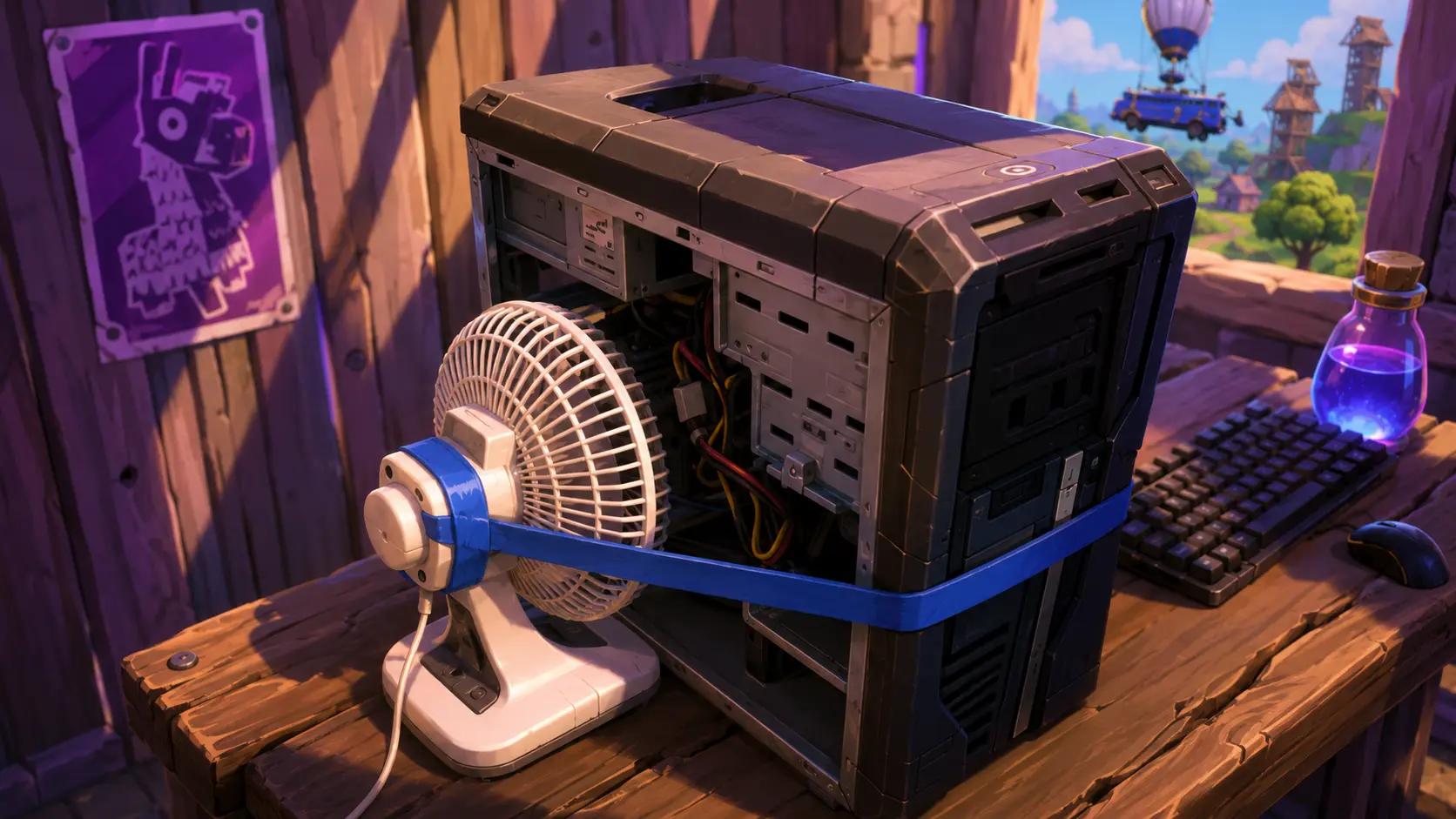
Most players install Fortnite, mess with the settings for about 10 seconds during the first launch, and then never touch them again. That’s a real mistake, and it’s probably costing you fights you don’t even realise you’re losing.
The single biggest factor in your performance is FPS. If your game is running at 30 FPS, you’re not losing fights because you’re bad. You’re losing them because your screen is literally updating slower than the screen of the person you’re shooting at. They’re seeing you before you’re seeing them, and there’s no skill you can develop that fixes that. You need at least 60 FPS to compete at all, and ideally 120 or more if you want to actually play seriously.
Here’s what’s worth changing in your settings:
Performance Mode. If your PC or console is struggling, just turn this on. Yes, it makes the game look uglier. Honestly? Doesn’t matter. Ugly at 144 FPS will beat pretty at 45 FPS in every single fight. Don’t let pride about graphics cost you wins.
View Distance: Far or Epic. You want to see players coming from across the map. If this is set to Near or Medium, there are players hiding from you in fog walls that you literally cannot see. Free kills on you.
Shadows: Off. Shadows look nice and tank your FPS. Easy decision.
Effects: Low. Same deal.
Anti-Aliasing: Off, or TSR Performance if you really want some smoothing. Modern anti-aliasing eats frames for what’s honestly a pretty marginal visual upgrade.
Visual clutter. Turn off motion blur, film grain, and lens flares. All three make it harder to track moving targets and harder to see when you’re taking damage. They exist purely for cinematic vibe, not for gameplay.
If you’re on controller, go check your deadzones right now. The default Xbox and PS5 deadzones are way too high out of the box. Set your inner deadzone to around 5–10% and your outer deadzone to 95%. Your aim is going to feel noticeably sharper almost immediately.
2. Sensitivity and Aim Training
Aim is the one skill beginners ignore the longest, and it’s wild because you can’t win a fight you can’t land shots in. Building gets all the spotlight, and yeah, building is huge, but if your aim is bad, no amount of building is saving you.
Let’s start with sensitivity, because this is where most beginners go wrong before they’ve even taken a fight. The biggest mistake new players make is playing on a sens that’s way too high. High sens feels fast and exciting and like you have all this control. It also makes your shots fly all over the place the second your target starts moving. You will lose every fight to anyone with steady aim, even if your reflexes are better.
A solid starting point for KBM is 800 DPI with in-game sens around 0.07–0.10. For controller, X and Y around 5–7 is reasonable. It’s going to feel lower than you’re used to. Stick with it for a week. Most players who switch never go back up.
Once your sens is dialled in, you actually need to train. A daily aim routine takes 15 minutes and it’s worth way more than the time it costs.
Kovaak’s or Aim Lab. Both are pretty cheap or free on Steam. These are dedicated aim trainers that top FPS players in every game use. Five minutes of basic flick scenarios, five minutes of tracking. That’s it. You don’t need to grind these for hours, you just need to actually do them.
Fortnite Creative aim maps. This is aim training that translates directly to the game you’re trying to get better at. Try these (verify they’re still active):
- 6562-8953-6567 — general aim training
- 7621-1690-9654 — tracking and reflex
- 5907-6334-4517 — edit plus aim combined
Warm up before ranked. Just five minutes of aim training before your first match. Not optional. Pros do this every session, and there’s a reason they do.
3. Build a Warm-Up Routine
Most players boot up Fortnite, queue ranked immediately, lose the first three games in a row, and then start actually playing well by game four. Those first three games are warm-up. You’re just paying for them in lost rank instead of using a free Creative map.
Here’s a 15-minute routine that works for any skill level.
Minutes 1–5: Aim training. Hop into Kovaak’s, Aim Lab, or one of those Creative aim maps. Get your shots actually dialled in.
Minutes 5–10: Edit course. Run through 30 fast edits on a basic edit map (8064-7152-2934 is a popular one). Don’t try to be perfect, just build the muscle memory.
Minutes 10–13: Build battles. Jump into a 1v1 box fight map or a zone wars and take a few quick fights. Even if you lose them, doesn’t matter. You’re getting your build reactions warm.
Minutes 13–15: Mental check. Take a breath. Your first ranked match is about to load in. Remind yourself this is one game out of many. You’re tilt-proofing yourself before you even queue.
Once you actually take improvement seriously, this routine stops being optional. Skipping it is fine if you’re playing casually with friends. For ranked or arena? Skipping it is basically throwing.
4. Customize Your Locker
Skins don’t give you powers. I know that. You know that. Anyone telling you otherwise is trying to sell you something.
But here’s the thing nobody really wants to admit. The way you feel when you load into a match actually matters more than people give it credit for. When your locker is full of stuff you genuinely like, with skins that feel like you, something clicks mentally before the bus even drops. It’s the same reason athletes wear specific gear before games. Nobody thinks their socks are winning the championship. But the right socks put them in the right headspace, and that part is real. And imagine the confident boost you get from owning some of the rarest skins in Fortnite. It makes you feel like a veteran, and sometimes that feeling carries over to your gameplay, and we end up playing really well.
A few things worth knowing about locker choices if you actually want to be tactical about it:
Smaller, lower-visibility skins help in close-range fights. This one surprises people. Defaults are actually one of the hardest skins to spot in box fights because there’s no bulky outline to track. A chunky skin with shoulder pads and weird angles gives your opponent a clearer silhouette to lock onto. It’s not a massive edge, but it’s an edge.
Bright skins make you a target at long range. If you’re sprinting across an open field in neon orange, you just made the sniper across the map’s job way easier. A lot of tactical players default to darker, more muted skins for exactly this reason. Not because they look cool, but because they disappear into the environment.
Pickaxes and contrails are personal. These don’t affect gameplay at all, so just pick whatever feels like you. Some players swear by their lucky pickaxe. Honestly? That’s fine. If it puts you in the right mindset, it’s doing its job.
If you’re trying to build out your locker fast, especially with rare or older skins that don’t really rotate through the shop anymore, Fortnite Accounts with skins are a route some players go. A lot of veterans who don’t actively play anymore sell their accounts with cosmetics that would take you months, sometimes years, to grind out normally. Just something to know exists. Plenty of players stick to chasing shop rotations and that works too.
5. Resource Management and Loadout Priority
Here’s a fun way to lose a fight you should have won: have perfect aim, dominate the engagement, and then run out of mats halfway through. It happens to people way more than they want to admit, and it’s basically the silent killer that separates beginners from intermediates.
Mats target by phase:
- Right after landing: around 200 of each (wood, brick, metal)
- Mid-game (circles 4–5): 500 wood minimum, 300 brick, 200 metal
- End-game (final circles): 700+ wood, 500+ brick, 400+ metal
Wood is honestly your bread and butter. It builds the fastest, costs the least to swap to, and it’s what you’re going to spend in about 90% of your fights. If you have a quiet moment, you should always be farming wood.
Loadout priority (current meta):
Slot 1: Shotgun. Pump, tactical, whatever you find first. Doesn’t really matter at your level. Slot 2: AR or SMG. AR for medium range, SMG for close build fights. Slot 3: Heals. Mix of big shields and minis for active healing, medkits for emergencies. Slot 4: Mobility. Shockwaves, launch pads, boost items, whatever’s around. Slot 5: Flex slot. Sniper, secondary heal, secondary AR, more mobility. Depends on the situation.
Heal priority order:
- Big shield potions (instant 50 shield)
- Mini shields (quick 25 each)
- Slurp Juice or chug splash, when they’re in the meta
- Medkits (emergency only because the 10-second use timer leaves you exposed)
- Bandages (genuinely last resort)
What to skip when you land. Common-tier weapons when you already have better. Tons of ammo for guns you’re not actually running. Heals you don’t need yet. Loot is a finite resource for the whole lobby, so just take what you actually need and move on.
6. Train Your Movement
Aim and building get all the love. But movement is what decides whether anyone can even hit you in the first place. You can have terrible aim and still survive most fights if your movement is good, because nobody can land shots on you.
The two movement skills that matter most:
Slide jumps. Sprint, slide, jump out of the slide. This keeps your momentum going and makes you way harder to track. It’s basically the foundation of how modern Fortnite is played at higher levels. Drill it until it’s reflexive and you don’t even think about it.
Mantle climbs. When you sprint at a wall or low surface, your character automatically pulls themselves over it. This saves time, keeps your momentum, and is way better than stopping to build a ramp every time you need to get over something. Use it constantly during rotations.
Sprint chains. You can chain sprint into slide into jump into sprint again and basically maintain peak movement speed forever. Most intermediate players still kind of walk between fights, which is wild. Pros never stop moving.
Here’s the drill. Rotate from one named POI to another using only sprint, slide, mantle, and jumps. No vehicles, no shockwaves, no launch pads. If you can move efficiently using just your character, mobility items become a bonus instead of a crutch you depend on.
7. Improve Editing
Editing is the thing that separates good players from average ones, and the good news is you don’t need to learn a hundred different edits. You need five. That’s it. These five are the foundation of every build fight you’ll ever take.
Edit 1: Window edit. Take a wall and remove the middle row. This is the most common edit you’ll do. You’ll use it for shots, peeks, resets, everything. Drill this one until you can do it in under a second without thinking.
Edit 2: Door edit. Remove the two bottom squares of a wall. Lets you walk through your own builds without breaking them, which is huge for repositioning fast.
Edit 3: Cone tunnel. Remove the middle of a cone to create a peek angle from above. Honestly underused by most intermediate players, even though it’s one of the most useful angles in the game.
Edit 4: Floor edit. Drop a square from a floor piece. Lets you peek down on opponents below you or escape downward when you’re under pressure from above.
Edit 5: Edit reset. This is the skill of editing a wall and immediately resetting it back to full. You use this to bait shots, create timing windows, and fake out your opponent. It’s the most practice-heavy of the five, but it’s also the highest-impact once you have it down.
Find a Creative edit course (8064-7152-2934 works) and run it every day. Twenty fast laps takes about five minutes. Do this consistently for two weeks and you’ll genuinely feel the difference. Edits that used to take you a second will start happening instantly.
8. Practice with Blueprint Mode
Blueprint mode is the free training tool the game gives you, and almost nobody uses it correctly.
What it does is let you build with infinite materials in a no-pressure sandbox. The mistake most players make is treating it like a place to mess around and build creative bases. That’s not what it’s for. It’s a gym. The point is to drill specific build patterns until your hands just do them without you thinking about it.
Drills worth doing daily:
90s. Three walls and three floors stacked in a corkscrew pattern that gets you up high fast. Do 20 reps of going up five stacks of 90s. Don’t stop until you can do it without looking at your fingers.
Tunnelling. Wall, ramp, floor, wall, ramp, floor, on repeat. This lets you cross open ground without exposing yourself. Just do laps of tunnelling across an open space.
Box up under pressure. Practice slamming four walls down around yourself instantly. Then edit one for a peek. Then reset it. This is your panic-button skill in real fights, and you want it to be muscle memory.
Triple edits. Place three walls in front of you, edit all three in sequence, take an imaginary shot, reset. This trains the rhythm of edit-confirm sequences you’ll actually use against real opponents.
Most players treat Blueprint as a creative space. Treat it like a gym instead and you’ll improve faster than people doing five times your hours in regular matches.
9. Master Right-Hand Peeks
This one tip alone is going to win you fights you have no business winning, which is why I’m calling it out as its own section.
Your character holds their weapon in their right hand. So when you peek out from behind a wall on the right side, your gun barrel and your scope are already clear of the wall before your character model is. From your opponent’s perspective, they’re seeing basically nothing until your shot is already lined up on them.
Now peek from the left side instead. Your character has to expose almost their entire body before your gun can clear the wall. Your opponent gets an extra 0.3 seconds of seeing you before you can fire. That’s not a small gap, that’s enough time for them to spot you, aim, and shoot first. You will lose those fights consistently.
Here’s the drill. Every time you take a fight near a wall, position so the wall is on your left and your peek angle is to the right. Then combine this with shoulder swap (G on KBM, you’ll need to map it on controller if it isn’t already). Shoulder swap moves your gun to your character’s left hand, which means now left-side cover gives you the same advantage. Most intermediate players have literally never used shoulder swap. The first time you do it correctly in a fight, it’ll feel like you’re cheating.
10. Practice Counter-Damage
Counter-damage is the skill of trading shots correctly, and at higher levels, most fights are decided in trades and not in clean solo plays. So if you’re losing a lot of fights that feel “even,” this section is probably your gap.
The idea is pretty simple. When an opponent shoots you, there’s a small window before they can shoot again. That window could be a reload, a pump cooldown, the time it takes to re-peek. Whatever it is, you have time. Counter-damage is recognising that time and using it.
Here’s where most players go wrong. They take a hit and immediately panic-build. Wall, wall, wall, full retreat. Sometimes that’s right. A lot of times, it’s wrong. The actual correct move is to shoot back immediately. Trading 100 health for their 100 health is even. Trading 100 health for zero damage because you ran away and they pushed you down is a loss. You just gave up the fight.
When to trade:
- You’re at full HP and shields, and they’re probably not
- They just fired a pump and need 0.7 seconds before the next shot
- You’re in the better peek angle (right-hand peek, see Section 9)
When NOT to trade:
- You’re on low HP already
- They have a fast-fire weapon that’s fully loaded
- You can actually reset and re-engage on better terms
Counter-damage is basically a judgment skill. The drill is simple: every fight you take, before you reflexively throw up a wall, ask yourself “should I shoot first?” Half the time, the answer is yes. Most players never even think to ask the question, which is why they keep losing trades they should be winning.
11. Piece Control With a Simple Pattern
Piece control is one of those things that sounds way more complicated than it actually is.
All it really means is taking your opponent’s builds and replacing them with your own. That’s it. When you do this well, you basically force your opponent into positions they don’t want to be in, and you get free shots while they scramble to fix what you just broke.
Here’s the pattern that works in pretty much every box fight you’ll get into.
Wall, edit, wall. You take their box wall and replace it with your own. Then you edit your wall (window or door, doesn’t really matter) and either take the shot or fake it. Then immediately, before they have time to react, you replace the edited piece with a fresh wall. Then you do it again.
The reason this works comes down to how people actually behave in build fights. The second someone loses a wall, their first instinct is to get it back. They start trying to retake the piece. And while they’re doing that, they’re not shooting you. Which means you have time to set up the next move. Then the next one. Then the next one.
Most opponents at the intermediate level can’t break this cycle. They keep trying to retake walls and you keep replacing them faster than they can react. Eventually they panic, take a shot through your edit, miss, and that’s the fight.
Where to actually practice this: find a 1v1 box fight map in Creative. Doesn’t really matter which one, just pick one that works. Then drill the pattern. Wall, edit, peek, wall. Wall, edit, peek, wall. Don’t worry about eliminations for now. Just chase the rhythm of the pattern itself. The eliminations come naturally once the muscle memory is there.
One last thing about piece control. It’s worth saying this out loud because nobody really does. Piece control wins more fights than aim does at higher levels. Like, it’s not even close. Two players with the same aim, where one has good piece control and the other doesn’t, the one with piece control wins roughly 7 out of 10 times. That’s how big the gap is. If you’re stuck at the intermediate level wondering why your aim improvements aren’t translating to wins, this is probably why.
12. Learn Baiting With Real Examples
Baiting is what advanced players do that intermediate players just can’t read. The idea is simple. You do something that makes your opponent expect a specific action, and then you do the opposite. They commit to their expectation, you punish them for it.
The fake reload bait. You shoot four of your five pump shells. The pump sound is super distinct, and your opponent hears it. They assume you’re reloading and they push to catch you. Except you have one shell left. You shoot them with it. This works on intermediate players almost every single time.
The fake build bait. You start placing walls between you and your opponent. They see walls going up and assume you’re turtling for the long term. While they wait, you stop building, peek, and shoot.
The fake retreat bait. This one’s better in squads. Fake a retreat by jumping behind a wall like you’re low on HP. Your opponent pushes, expecting an easy clean-up kill on someone running away. Your teammate (or your reset position) catches them in the open.
The double peek bait. Peek briefly without shooting. Don’t even line up a shot, just expose yourself for a half-second. Most opponents will pre-fire that exact spot expecting you to peek the same way again. Wait two seconds, peek a different angle, take the shot for free.
What ties all these together is that baiting is about creating expectations. Most players act on the first thing they think they’re seeing. Advanced players build entire sequences around how predictable that reaction is.
13. Track Opponents
Sound is honestly your sixth sense in Fortnite, and players who win consistently are tracking way more information than what’s just on screen. If you’re playing with bad audio or the game music turned on, you’re voluntarily blind.
Footsteps. They tell you direction, distance, and roughly what surface someone is on. Metal sounds different from wood, wood sounds different from grass. Running sounds different from walking. Spend 10 minutes in Creative just listening to your own footsteps on different surfaces. You’ll start noticing details you’ve been ignoring for hundreds of hours.
Build damage cues. When you hear a wall cracking and you can’t see it, someone is shooting builds nearby. Use the direction of the sound to triangulate where they are. This is huge for catching third parties before they get to you.
Reload sounds. Every weapon has a unique reload sound. Once you can recognise your opponent’s reload, you know exactly when to push. Free engagement window.
Heal sounds. Mini shields, big shields, medkits, chug splashes, all distinct sounds. If you hear someone healing, they’re at low HP or low shield. That’s a 2 to 10 second window where they’re basically defenceless. Push or take the free shot.
Glider deploys and vehicle sounds. These tell you when another player is rotating into your zone. Most players ignore this completely. Tracking it means you know when a third party is incoming before they’re on you.
The drill here is just play with quality headphones and mute the game music. That’s it. The audio Fortnite gives you for free is enormous, you just have to actually listen for it.
14. Watch Your Replays
Almost nobody watches their own replays. I don’t really get why. It’s literally one of the easiest ways to improve and somehow it’s the most ignored thing in the game.
After every loss, especially the ones where you sit there going “wait, what just happened?”, open up the replay. Watch the last 30 seconds before you died. Then watch the same thing from the opponent’s perspective. You’ll learn more in those 60 seconds than you will from an hour of YouTube tutorials.
Stuff worth paying attention to:
- Did you peek the same wall twice in a row? Because that’s free damage you handed your opponent.
- Were your edits actually as fast as you thought they were? Time them. You’ll be surprised.
- Did you completely miss sound cues that were obvious in hindsight? Footsteps, reloads, builds?
- What was your opponent doing right before they killed you? Were they actually baiting you?
You don’t need to do this for every single match. That’s overkill and it’ll just make you tilt at yourself. Once a session is enough. The goal isn’t to dwell on losses, it’s to find one specific thing you keep getting wrong and actually fix it next time you queue.
This is also, by the way, what pros do. Most pro players study their own replays way more than they study other players. There’s a reason for that. The fastest way to find your weaknesses is to watch someone with your exact decision-making get killed, and that someone is you.
15. Manage Tilt and the Mental Game
Tilt is actually real, and if you want to pretend it’s not real, I am not going to lie, that’s the easiest way to lose a lot in a single session.
Signs you’re tilted:
- You’re pushing fights you would normally have walked away from
- You’re blaming the game, your team, or lag for losses that were honestly your fault
- Your hands feel tense, your breathing is shallow
- You’re queuing the next game immediately after every loss without actually thinking about what just happened
What to do about it:
The two-loss rule. After two losses in a row, get off the game for five minutes. Do anything that isn’t Fortnite. Stretch, drink water, look out a window. Most tilt cycles only get worse the longer you stay inside them. Stepping away is genuinely the cheapest fix in the game.
Name what actually went wrong. Were you tilted because you got out-aimed, out-built, or out-rotated? Pinpointing the actual issue stops the spiral. “I lost because I peeked into a wall I shouldn’t have” is something you can fix next match. “I’m garbage at this game” is not, and it just sends you further down.
Limit your sessions. Diminishing returns hit way harder than people think. After about three hours of ranked, your reaction time and your decision-making both noticeably drop. Two focused hours genuinely beats four tired ones. Quality beats quantity every time.
The “one more game” trap. When you keep telling yourself just one more, you’re almost always playing worse than the last one. Set a number before you start the session. When you hit it, stop. Even if you’re winning. Especially if you’re losing. The hardest part of getting good at this game isn’t the mechanics, it’s knowing when to walk away.
The mental game basically carries every other skill in this guide. You can have perfect aim, perfect builds, perfect game sense. If you tilt for 30 minutes a day, you’re not climbing. The players who actually improve consistently are the ones who manage their head, not just their hands.
That’s the whole game.